
Designing a Small Kitchen That Feels Calm and Considered
The most successful kitchens often begin with understanding the room itself. By embracing a room’s natural qualities, establishing priorities and designing around everyday routines, it becomes easier to create a kitchen that feels calm and considered.
The most successful kitchens often begin with understanding the room itself. In a small kitchen, that means paying close attention to the qualities that are already there: the shape of the room, the way it connects to the rest of the house and the role it plays in everyday life. As that understanding begins to take shape, it often becomes easier to decide what matters most.
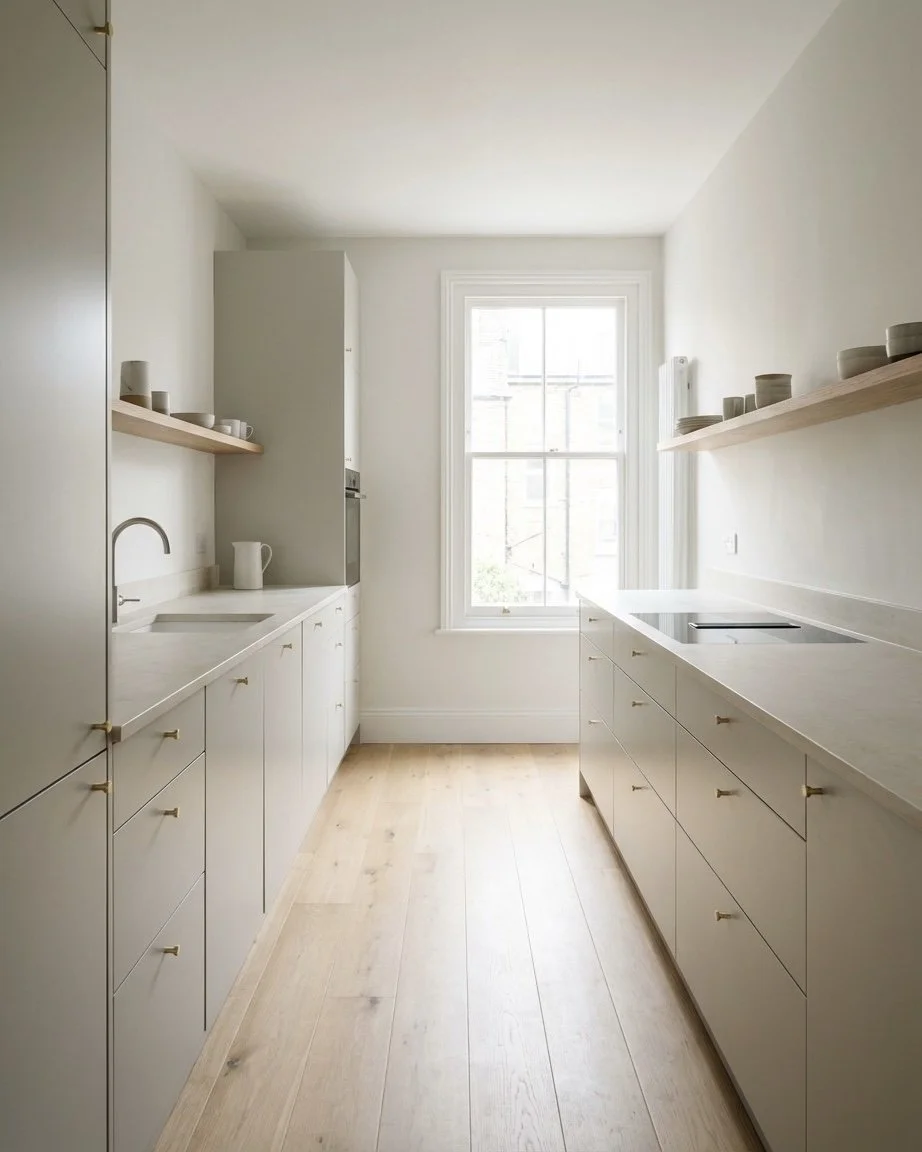
Careful attention to proportion and natural light helps create a kitchen that feels bright, calm and connected to its surroundings.
One of the advantages of a small kitchen is that it encourages certain decisions to be made early in the design process. What deserves room? What matters most to the household? What will improve daily life, and what can be left out?
For one household, that may mean prioritising a good-sized area for cooking and preparing food. For another, it may be a small spot where children can sit and draw whilst dinner is being made. Or simply a space that feels calm and uncluttered to return to at the end of a busy day.
Once those priorities become clear, it often becomes easier to think about how the room should be organised.
In a smaller kitchen, thoughtful storage is often less about increasing capacity and more about creating order. A well-planned pantry, integrated appliances and carefully organised drawers can help everything find its place. Cutlery dividers and dedicated storage for pot lids and trays may seem like small details, but they can make everyday tasks feel simpler and more enjoyable.
Many of these decisions begin with the routines that happen every day. Where do you naturally put the shopping when you come through the door? Where do you make breakfast? Which cupboard do you open most often?
These habits are unique to every household and are often where the most thoughtful design decisions begin, especially when space is limited.
Every kitchen is different. Yet the same underlying principles still apply. By understanding the room and focusing on what matters most to you and your family, it becomes easier to create a kitchen that feels settled, welcoming and shaped around the people who call it home.
The North-Facing Family Kitchen: Designing with Softer Light
North-facing kitchens have a character all of their own. With softer light and a calmer atmosphere, they invite a more thoughtful approach to colour, material and lighting. When handled well, they can become some of the most comforting and quietly beautiful rooms in a home.
North-facing kitchens ask something different of a room. The light tends to read cooler, shadows stay a little longer and colours do not always behave in the way people expect. Yet they have a quiet, enveloping charm that feels distinct from the energy of a brighter space.
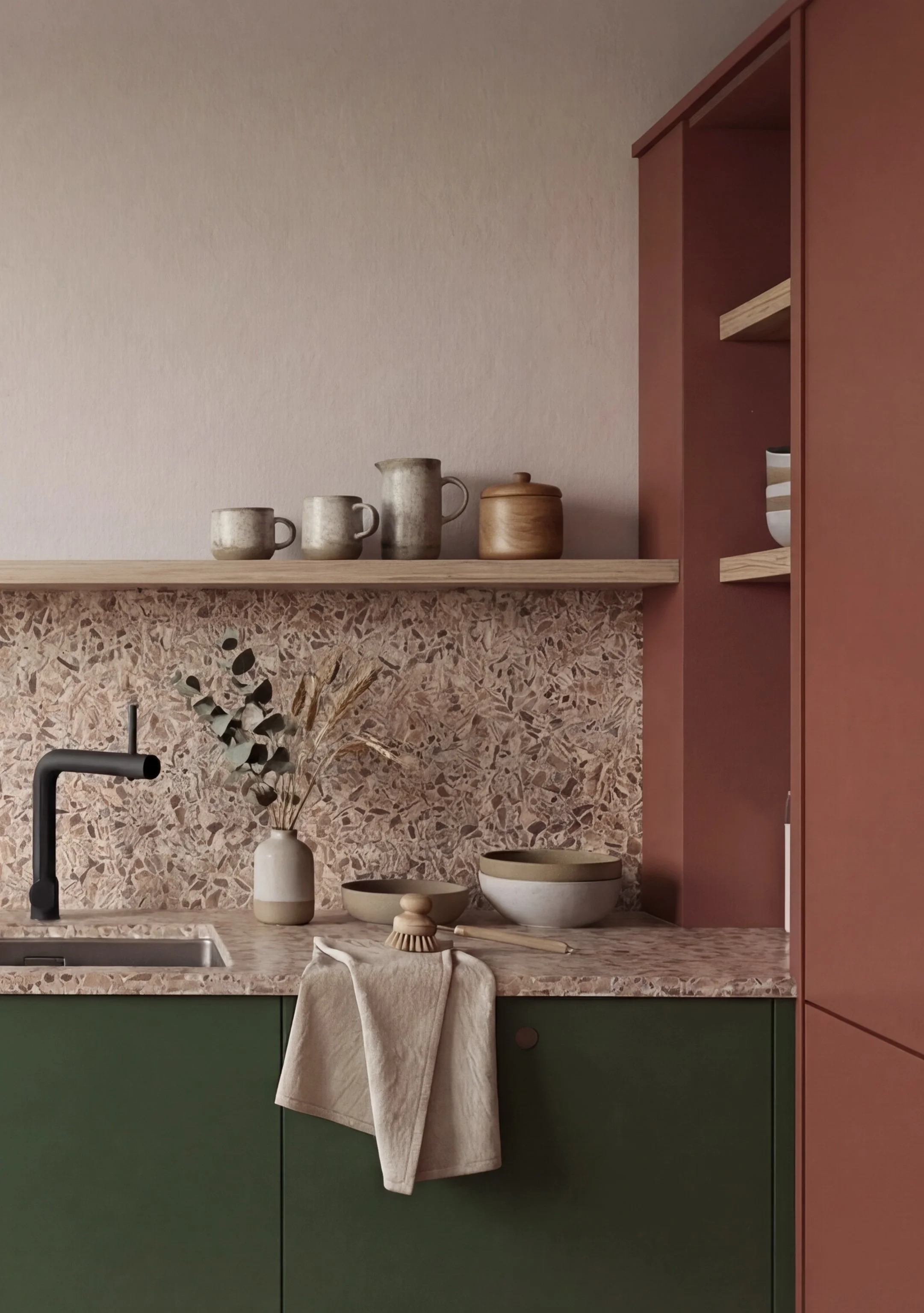
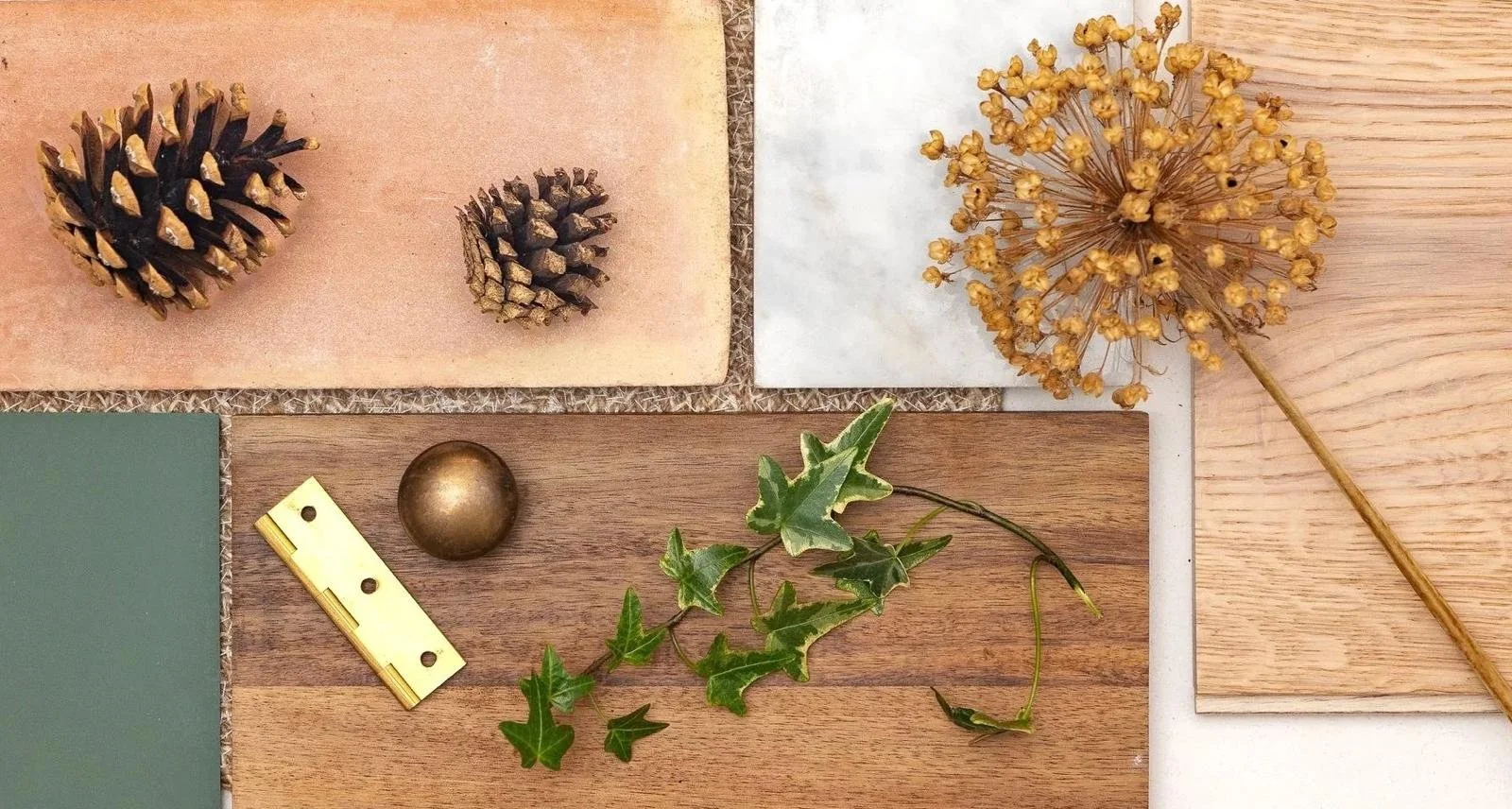
Earthy tones such as deep muted greens, clay and terracotta help create a soft, enclosed feel, while textured surfaces gently reflect the available light, bringing warmth, movement and depth to the space.
North light arrives gently, settling over surfaces in a way that feels calm and consistent. It can make a room feel grounded, almost hushed, which suits a kitchen surprisingly well. In a room used every day, that gentle atmosphere can become part of what makes it so comforting to be in.
The secret is not to fight against that softness, but to embrace it. Earthy tones often feel especially at home here. Muted greens, clay, terracotta and chalky neutrals can sit beautifully in cooler light, creating a kitchen that feels settled, grounded and gently warming.
Materials play their part too and it is often natural finishes that work best. Timber brings warmth, stone adds quiet depth and brushed metals tend to sit more softly in cooler light than anything too polished. Terrazzo can bring a little pattern and movement too, helping to catch and reflect light without overwhelming the room.
As daylight fades, the character of the room begins to shift again. A pendant casting warmth over the table, soft LED lighting beneath open shelving and softer wall lights can help create pockets of light and quieter nooks within the room. These smaller moments of light bring warmth and focus to the places where you would naturally gather as a family, while also creating quieter corners that feel perfect for a good cup of tea and your favourite book.
A north-facing kitchen may never feel flooded with sun, but that is not what gives it value. Its beauty lies in its stillness, its softness and the way it can feel quietly reassuring from morning through to night. With thoughtful use of colour, material and light, it often becomes the sort of room people feel most at home in.
The Shaker Kitchen: Why Classic Design Beliefs Remain Timeless
Shaker kitchens in Gloucestershire bring together simple, practical design that makes family life easier every day. Well-made cabinets, thoughtful layouts and functional surfaces create a calm, low-maintenance space.
Shaker design draws its inspiration from the Shakers, a religious community that formed in the eighteenth century. Their way of life was guided by values of simplicity, usefulness and careful craftsmanship. Everything they made, from furniture to interiors, reflected these beliefs.
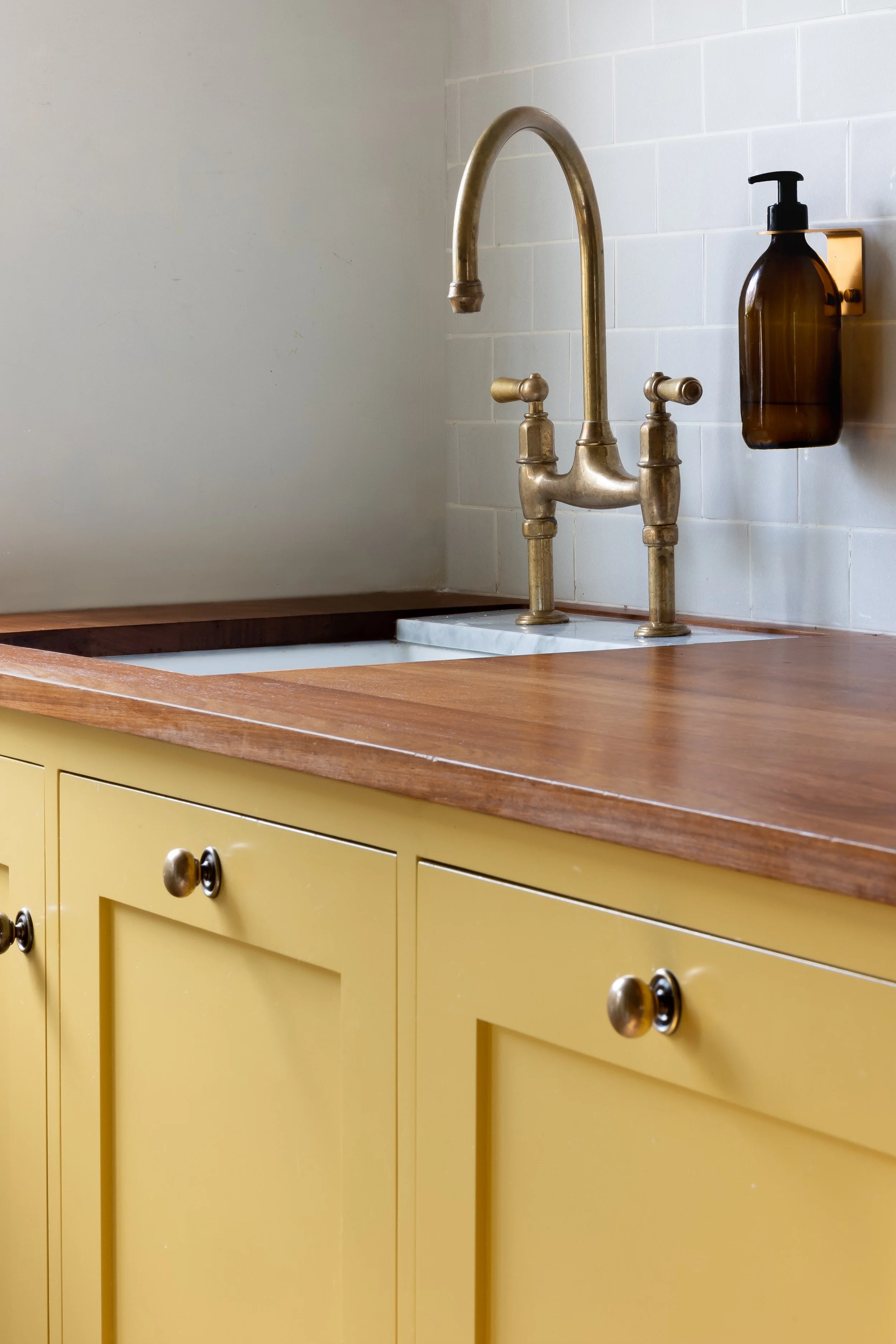
Clean, simple lines and functional surfaces make a Shaker kitchen easy to maintain and well suited to busy family life.
The Shakers’ approach was never intended as a style. Their aim was simply to make useful things well. Yet at a time when much furniture was decorative and ornate, their simple, carefully made pieces naturally stood apart. The beauty of their work came from the quality and thoughtfulness of their making, seen in Shaker homes where chairs could be hung neatly on peg rails to keep floors clear and large work tables were built for both food preparation and family tasks. Every piece had a purpose, and that sense of order carried through the whole home.
This influence is echoed in the modern Shaker kitchen. Plain framed cabinet doors, practical handles and balanced proportions create a space that feels calm, easy to use and welcoming. Storage and surfaces are functional, making ingredients easy to find and spaces simple to keep clean - especially helpful after a busy day when dinner needs to be prepared quickly. Islands and tables provide areas where the whole family can gather. Like the peg rails and work tables of the past, every element has a purpose and a place, supporting both order and everyday life.
Modern Shaker kitchens may feature painted finishes, islands, glass-fronted, or integrated cabinets, yet the underlying principles remain unchanged. Simplicity, usefulness and careful craftsmanship guide the design, with solid timber and precise joinery creating spaces that feel practical, welcoming and timeless. These kitchens can be enjoyed for many years, allowing for scuffs, spills and small marks that come with everyday life.
That is why the design beliefs of the Shaker kitchen remain so relevant today. When a kitchen is designed around how people truly live and work, its beauty comes naturally - rooted in its simplicity and the care in its making.
A Kitchen in Use: A Conversation About Wood and Its Finishes
An exploration of wood and its finishes in the kitchen, from painted and oiled surfaces to natural timber. This journal piece looks at how wooden kitchens respond to everyday family life in Gloucestershire, how finishes can be renewed over time, and why wood remains a timeless, adaptable choice that ages gracefully with use.
Wood is timeless, classic, and adaptable. Its surfaces, whether painted, oiled, or left natural reveal texture, grain and subtle variation that change with light and everyday use. How timber responds to family routines quietly shapes the feel of a kitchen, adding warmth, character and a sense of continuity.
Wood offers a versatile range of finishes. Painted timber can be refreshed or repainted over time, bringing a soft, familiar feel and allowing colours to evolve as tastes change. Natural, unpainted timber reveals the richness of its grain, offering depth, warmth and a quietly distinctive character. Light sanding and oiling can restore its glow, enhancing the material while allowing it to evolve gracefully. Like all natural materials, solid timber may shift slightly with seasonal change and finishes benefit from gentle handling and regular care.
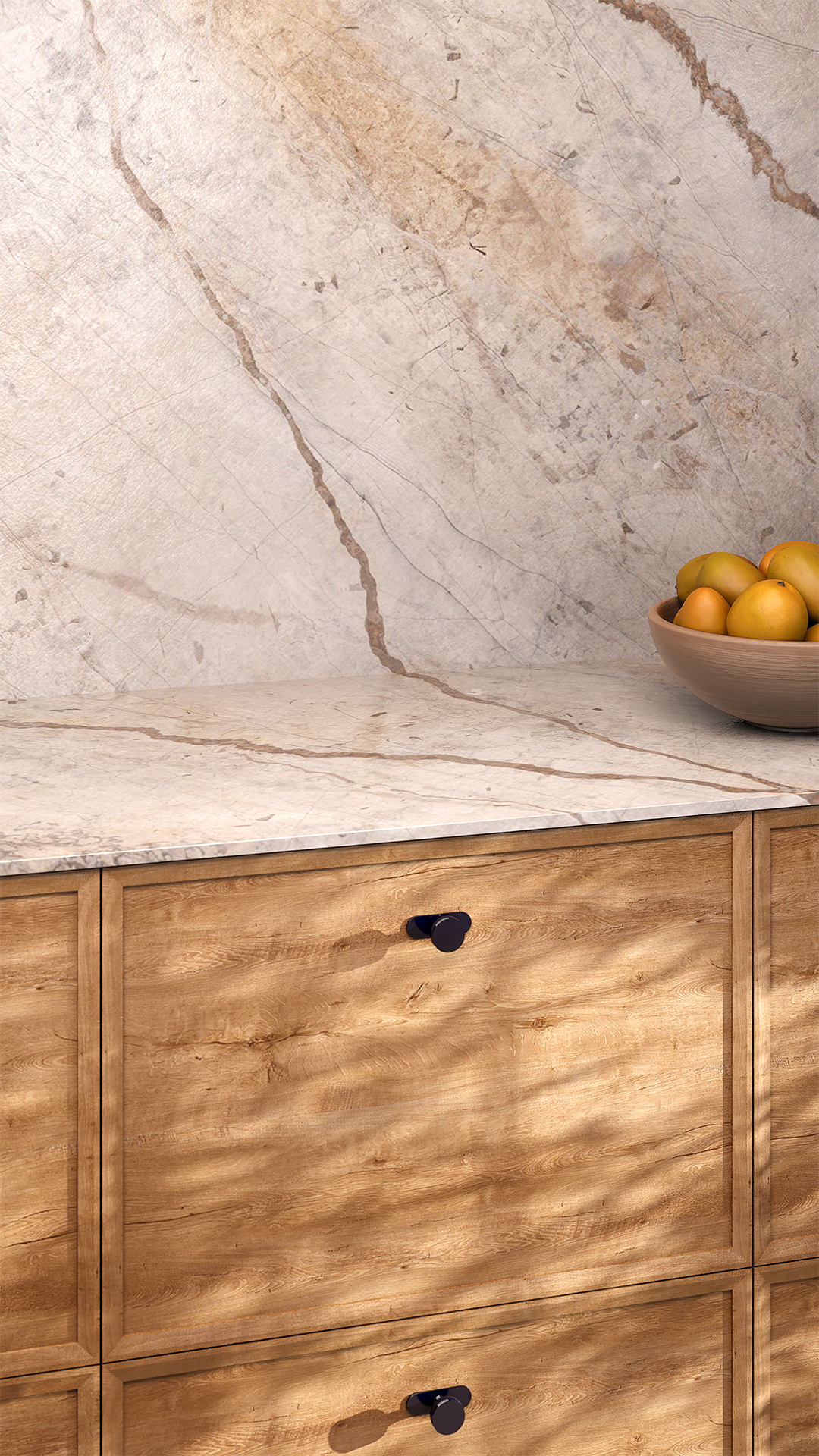
Natural, unpainted timber reveals the richness of its grain, offering depth, warmth and a quietly distinctive character.
These surfaces live with the family. Drawers are opened and closed, meals prepared, conversations shared - the kitchen quietly holds it all. In a home full of everyday life, this often means accepting the occasional mark from use, knowing it can be renewed or refreshed when the time feels right.
Over time, a wood finish quietly reveals its timeless character and enduring adaptability and with gentle care, it ages gracefully - helping to create a space the family can enjoy every day and through the years to come.
The Changing Family Kitchen: Thoughtful Design for Everyday Life
In Gloucestershire and beyond, the family kitchen has grown into more than just a place to cook. Thoughtful design, considered storage and everyday rituals have helped it become another room in the home - a welcoming, practical space where life quietly unfolds.
There was a time when the kitchen was mainly functional. Appliances stood where they were needed, cabinetry did little more than store ingredients and everyday essentials, whilst the kitchen served one clear purpose: to support the making of a meal.
Over time, something has gently shifted. In many homes, family kitchens have become quieter, calmer and more considered, whilst the working parts of the kitchen step back, quietly supporting daily life.
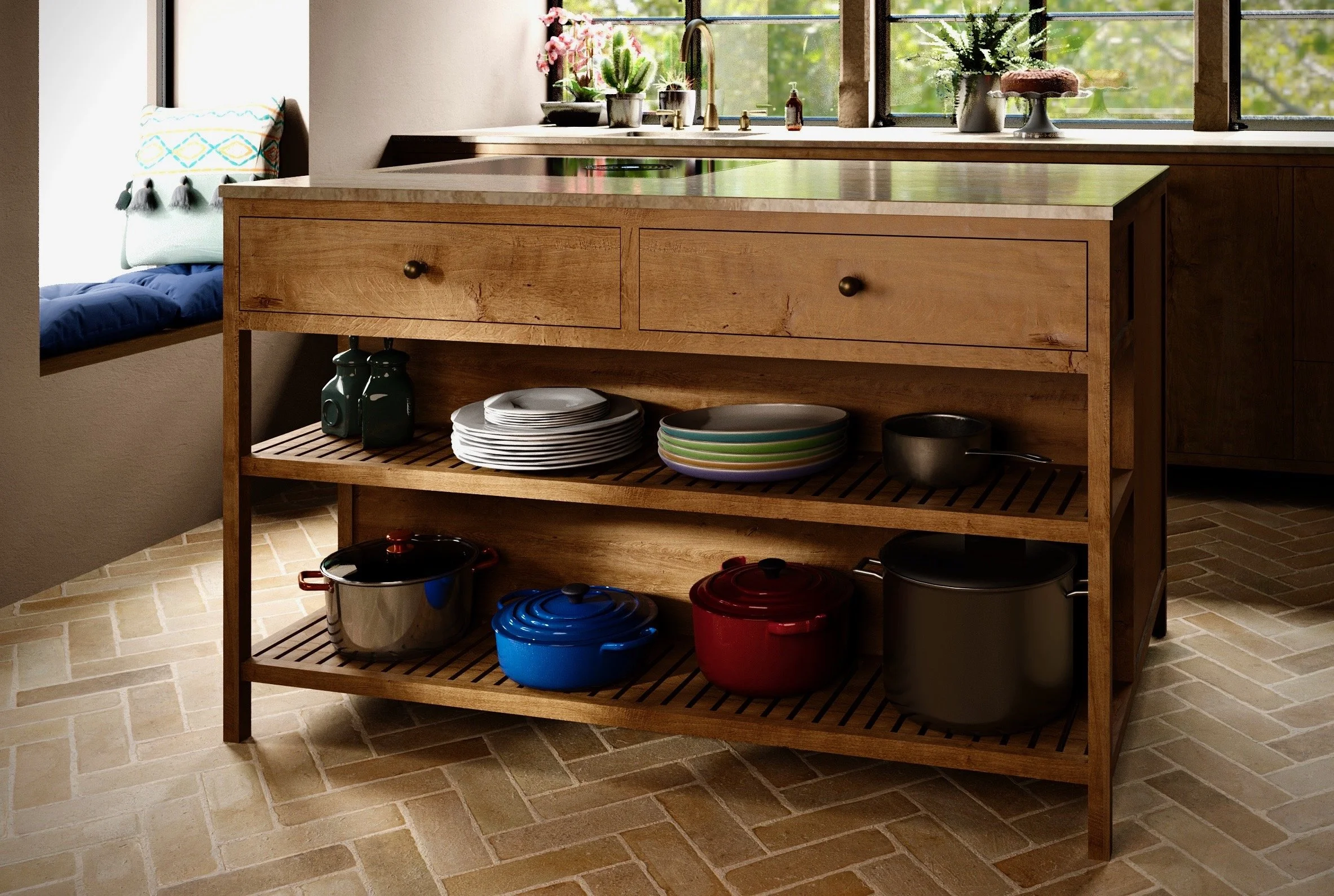
Storage is now often part of the kitchen design , displaying the familiar objects we reach for every day.
In part, this reflects a broader shift in how kitchens are used. Once a separate and purely practical space, they have gradually become another room within the home, shaped as much by conversation and daily routines as by cooking.
Storage plays a more visible and considered role in the kitchen, with glass-front pantries revealing jars, crockery and well-used ingredients. Dresser units feel more like furniture than fitted cabinetry. Walk-in pantries are given space, light and intention. These corners hold life and stories, quietly shaping the kitchen.
The machinery fades into the background, while the human parts - baking bowls, coffee cups, shelves holding everyday things - are able to be seen. The kitchen becomes about living, daily routines and the objects that support them.
In many ways, this evolution reflects how kitchens are used today. They are gathering places. Homework tables. Coffee spots. A place where meals are shared over good conversation - where life quietly unfolds.
By hiding the noise and making space for everyday family rituals, the modern kitchen finds balance - becoming a space that invites you in and continues to age gracefully through the years.
A Kitchen Shaped by Light: How Subtle Shifts Influence Feel & Function
Light plays a quiet yet powerful role in kitchen design, shaping how spaces feel from morning to evening. In Gloucestershire homes, thoughtful use of orientation, materials and natural light creates kitchens that are warm, functional and deeply connected to everyday living.
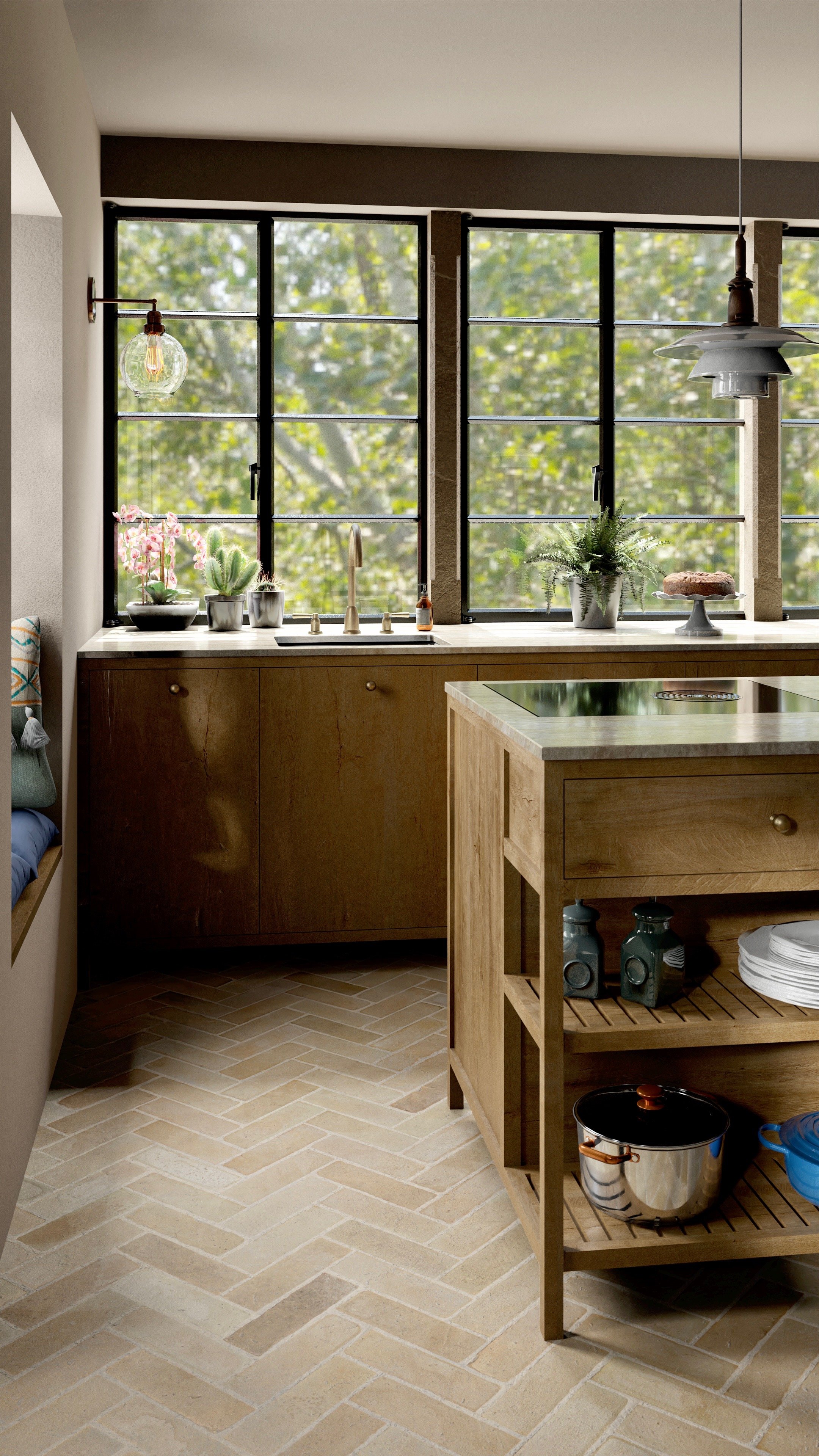
Placing key elements like an island or work surface where the sun naturally falls, can help make a space feel brighter, warmer and more inviting throughout the day.
Light can be one of the most subtle yet powerful elements in a kitchen. It moves across surfaces, interacts with materials and subtly shapes how a space feels throughout the day. A bench bathed in morning sun invites a pause with coffee, while a dining table in the late afternoon glow offers a warm place to share a meal with family and friends.
Designing with light in mind begins with the placement of the room’s key elements. Where benches, tables and cabinetry sit can determine how each moment of the day is experienced. East-facing windows welcome the soft morning glow, turning breakfast into a calm ritual. South-facing rooms capture daylight throughout the day filling the kitchen with energy and clarity. West-facing sun warms the space in the late afternoon perfect for lingering over the evening meal, while north-facing light offers a steady, softer illumination, ideal for pairing with warmer materials to keep the space inviting.
Materials and colours respond beautifully to these subtle shifts. Timber deepens and glows as the sun moves, stone catches highlights that accentuate its texture and painted surfaces can read warmer or cooler depending on direction and hour. Clever pairings of tone, texture and colour can emphasise the room’s strongest features - a pale stone counter, a richly grained timber table or a light-filled breakfast nook - making the most of the space while keeping it welcoming and functional.
The scale and placement of windows also play a decisive role. A large picture window can flood the room with brightness, creating a sense of openness, connection to the outdoors and an underlying warmth that lifts the spirits whilst you’re going about your everyday chores. By considering how static elements interact with natural light, a kitchen becomes more than a functional workspace; it becomes a space designed around life itself, where every choice of material, colour and layout supports both comfort and warmth across the day.
Small Details, Lasting Design: The Hidden Elements behind Enduring Kitchens & Furniture
Discover how thoughtful, bespoke design transforms kitchens and furniture in Gloucestershire. From gentle curves to hidden details, it’s the small touches that make a big difference every day.
Every bespoke kitchen, cabinetry and piece of furniture tells a story through its design. Often it’s the small, hidden touches that quietly shape how a space feels and functions.
This can be found in the gentle curve of a rounded island which naturally guides movement through a busy family kitchen, the under-stairs cabinetry measured to fit perfectly within your home or a dovetail drawer designed and chosen for its strength and longevity. Together, these considered elements form the backbone of thoughtful design, creating intuitive spaces that feel effortless and quietly comfortable each and every day.
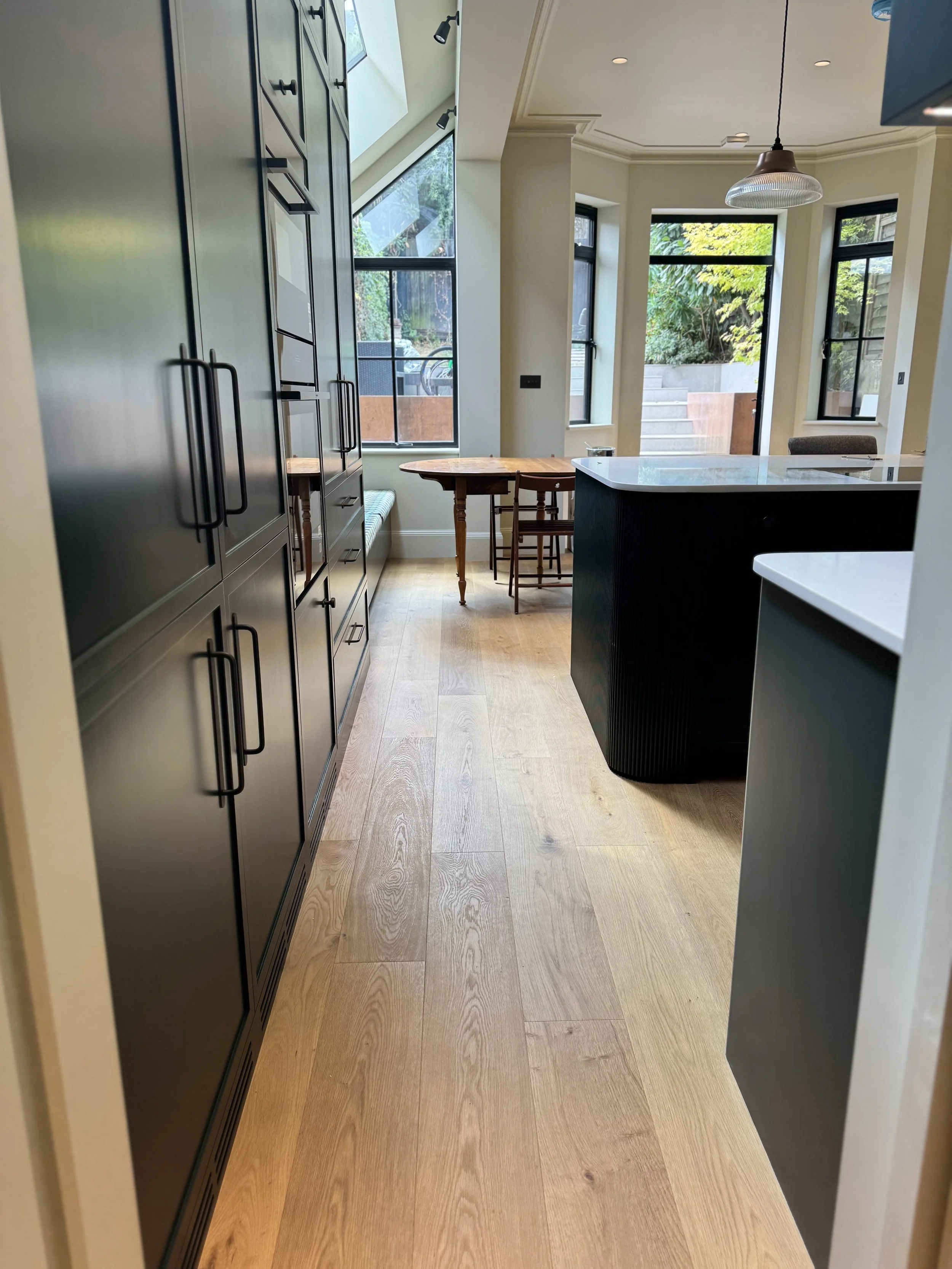
Smalls details that make a big difference: carefully positioned cabinetry draws movement towards the garden, while the gentle curve of the island eases circulation through a busy family kitchen. Echoed in the work surfaces, these curves help soften the space.
Handles are positioned where hands naturally fall, hinges close silently and drawers slide smoothly - quiet touches that support everyday life so your home feels calm, comfortable and welcoming. These are the kinds of thoughtful details we highlighted in When Good Design Makes Life Easier demonstrating how careful planning can transform the way a space works for a family, ensuring every line and every curve works in harmony.
Every home is unique just like the families within in it. From a traditional Cotswold cottage to a Cheltenham townhouse, bespoke design responds to each home’s character. It’s often the small behind-the-scenes details that accentuate a space and make it work for you. Every corner, drawer and surface is carefully considered - after all, it’s the attention to these small details that comes together to create kitchens and furniture that truly last.
The Everyday Pantry: Timeless Storage Ideas for Calm, Organised Family Kitchens
Explore timeless pantry storage ideas that help keep family kitchens calm, organised and practical. From thoughtfully designed shelving to multi-purpose spaces, see how a well designed pantry supports everyday life across Gloucestershire.
There’s something quietly reassuring about the pantry. It has the ability to bring order to the modern kitchen. It keeps work surfaces clear, essentials within easy reach and provides a dedicated space for lunchbox snacks, cereals and baking ingredients. With everything gathered in one place, the kitchen feels calmer, cupboards stay tidy and daily cooking and meal planning become simpler.
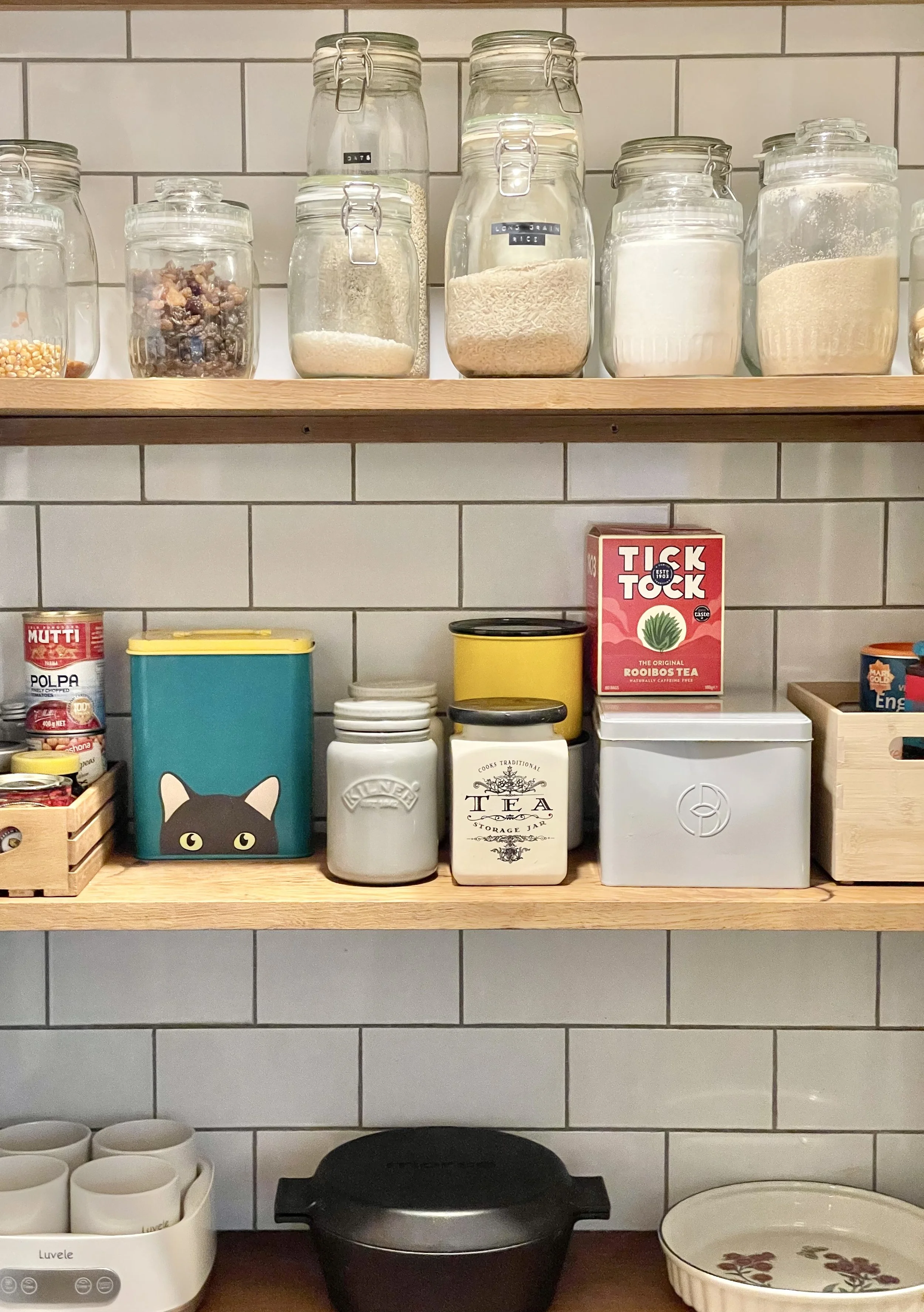
White tiles and warm wooden shelves create a bright, practical pantry where everything is easy to find and easy to clean.
This practical approach isn’t new. Pantries have been around for centuries, from the medieval paneterie which stored bread and dry goods to the separate Victorian pantry rooms for tableware and household essentials. These spaces were essential because they worked - keeping food organised, protected and accessible. Today’s pantries continue that tradition, adapting to modern kitchens while offering the same practical benefits.
Pantries now come in many forms to suit every home - whether you’re in a cosy Cotswolds cottage or a modern Gloucestershire townhouse. They can be a generous walk-in in a large kitchen, a tall cabinet tucked neatly into a corner to maximise vertical space or a bespoke compact pantry that transforms a small area. Each option offers practical family-friendly storage solutions. Thoughtful design details including pull-out drawers, adjustable shelves and bespoke spice racks ensure ingredients and tools are easy to find while giving the space a quiet sense of craftsmanship and care.
Lighting and clear labels further enhance the pantry, illuminating shelves and pull-out drawers with integrated or under-shelf lighting so everything is easy to see at a glance while maintaining a sense of order. Simple but considered solutions make the pantry a space that’s easy to use every day.
Thoughtful design extends to every member of the family. Shelves placed at accessible heights allow children to reach designated snacks safely and independently, encouraging confidence and small daily responsibilities. For adults, a tidy pantry makes weekly shopping simpler - you can see what you have, avoid duplicates and save money when restocking.
As well as keeping dry goods organised, modern pantries can double as utility spaces, housing coffee machines, small appliances, extra tableware or household essentials. By centralising everything you need, a thoughtfully designed pantry helps the kitchen feel calmer, work surfaces stay clear and daily routines become smoother - leaving the kitchen and your day a little lighter.
The Quiet Influence of Colour: Creating a Calm, Nature-Inspired Kitchen
Discover how soft, natural colours and biophilic design can shape a calm, family-friendly kitchen that feels connected to nature and the outdoors.
From the calm of your morning breakfast to the warmth of your evening meal, the kitchen is the heart of daily life, filled with colours and textures that reflect your unique personality and connection to the world around you.
As we look to bring these colours to life and create thoughtful, nurturing spaces, we’re often drawn to biophilic design - bringing natural light, textures and plants into the home whilst shaping the kitchen to feel balanced, open and intuitively laid out. We crave spaces that steady us after a busy day, a kitchen that renews us and offers a sense of calm.
Colour plays an important role in creating this connection. Soft, earthy greens - from gentle sage to deeper woodland tones - bring balance and calm. Blues inspired by sky and water create openness and clarity. Warm terracotta and clay shades add a grounding warmth, especially when paired with natural textures like solid timber work surfaces and stone flooring.
Two-tone cabinetry is a gentle way to bring contrast and personality into the kitchen while staying connected to nature. Soft sage on tall cupboards paired with a muted, earthy pink on the island can feel both uplifting and grounded, echoing the colours found in wild gardens and the buds of early spring growth. Together, these combinations bring a sense of quiet energy, keeping the kitchen fresh yet calm. By choosing earthy, nature-inspired tones derived from the same natural palette the contrast remains harmonious, giving the space depth, interest and individuality without overwhelming the room.
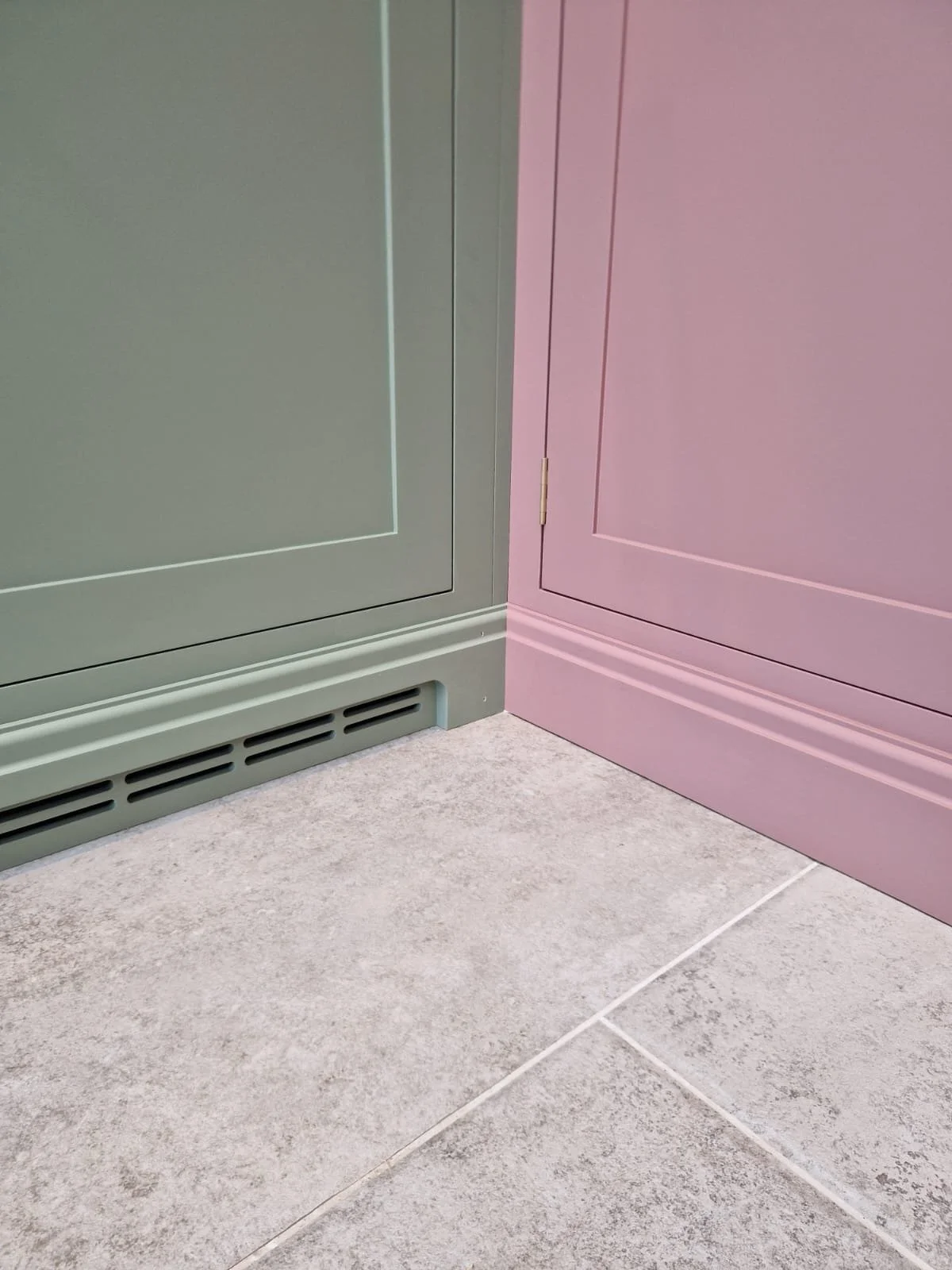
Two-tone cabinetry in soft natural hues, combined with neutral stone flooring, is a subtle way to connect your kitchen to the outdoors.
Paying attention to the way natural light falls across your kitchen strengthens this connection even further. By designing around light patterns - from the soft morning glow to the warmth of late afternoon - you allow the colours to reveal subtle shifts in tone throughout the day, creating a space that feels consistently calm and grounded. Skylights and large picture windows can help create a seamless continuity between the kitchen colours and the outdoors, allowing the space to shift gently with the seasons. The result is a kitchen that feels rooted in nature - calm and tailored to your family’s needs.
Touch, Texture and Time: The Kitchen as a Sanctuary for the Senses
Discover how a kitchen’s design can evoke the senses - from timber and stone to brass, creating a space to see, touch and feel in Gloucestershire and the Cotswolds.
Some materials ask to be touched. The soft brush of timber grain, the cool smoothness of marble, the gentle warmth of brass. These moments root us in the present, turning the familiar gestures within the kitchen - the opening of a drawer, the gentle sweep of a hand across a floured worktop and the chopping of herbs - into something more deliberate. A kitchen, after all, isn’t only a place we see but one we feel.
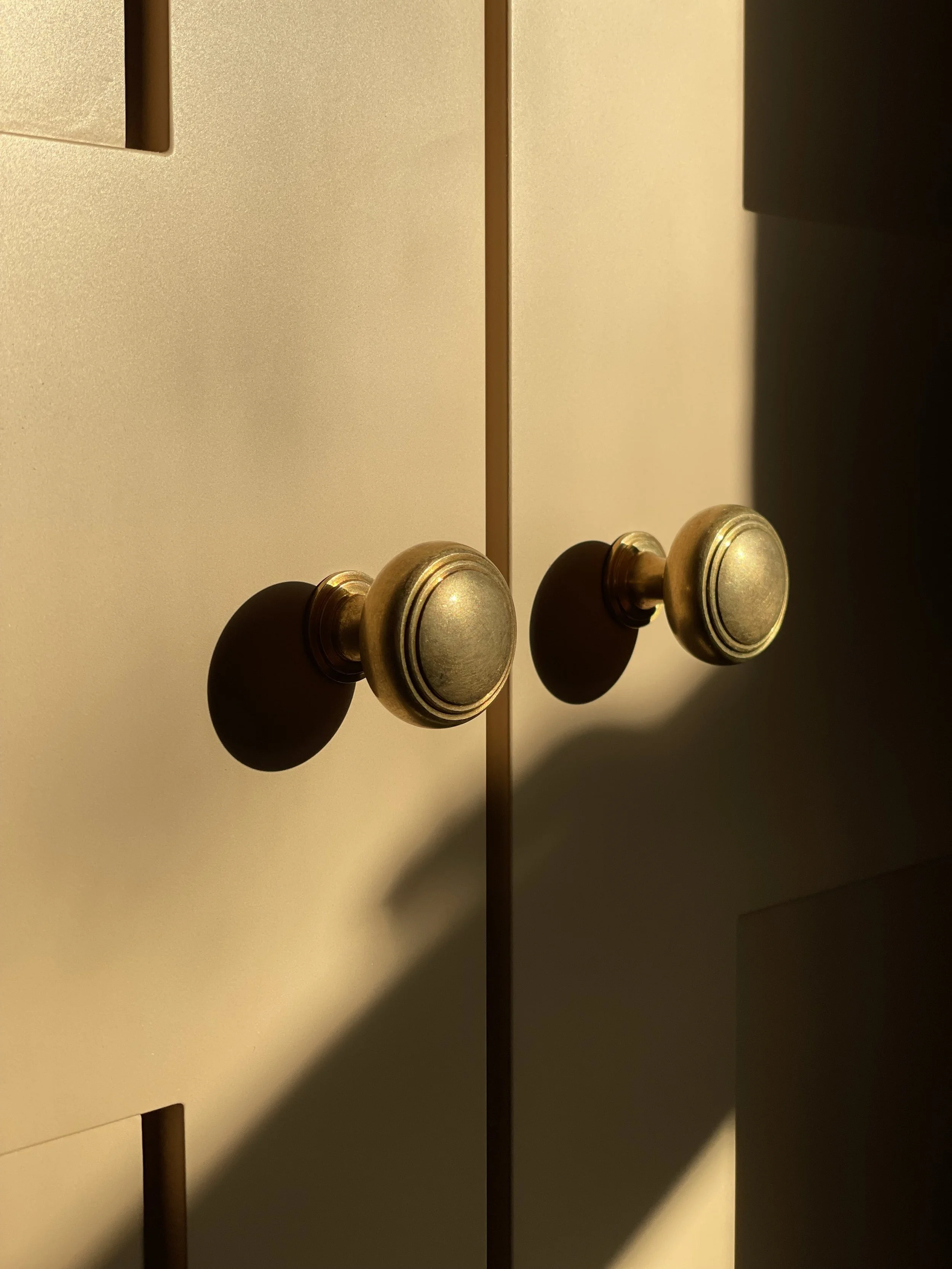
The warm glow of brass handles in morning sunlight – simple, small details that subtly evoke the senses in a well-crafted space.
Thoughtful design that endures, begins with attention to how a space meets the senses. The way light moves throughout the day across a matte-painted wall. The gentle shifts of colour that make natural stone feel alive. The steadiness of solid timber underfoot. You feel it when you knead dough on a wooden work surface - the quiet resistance beneath your palms, the grain smoothing slightly with each repetition. Over time, these details settle into the rhythm of daily life, becoming part of your home’s story.
The kitchen is ultimately a sensory haven. Imagine a small herb shelf by the window, rosemary releasing its aroma as the quiet warmth of bread crackles from the oven. With thoughtful positioning it allows natural light to enhance both growth and scent, connecting what you see and smell. Every day within the kitchen we are surrounded by the layered aromas of family meals coming together - spice, garlic, citrus or perhaps something sweet baking slowly in the background at the weekend. All of this comes together to help shape our memories and feelings of home.
Every surface and scent tells a story of touch and use. Wood deepens in colour, stone gains subtle character over time, metal warms to the touch of your hand. These traces mark life. They are reminders that the materials we chose for our homes will carry the marks of those who live within it.
Each visit reveals something new, a journey of the senses, whilst also offering the comforting familiar.
Timeless materials and enduring craftsmanship shape a gentle rhythm, inviting hands, eyes and imagination to linger - supporting the kitchen as a a space where the senses awaken - ready to be explored and experienced time and time again.
When Good Design Makes Life Easier: Maximising Space and Time in Your Family Kitchen
Matt from bread. at the studio in Gloucestershire shares how thoughtful kitchen design can maximise space and make your family kitchen calm, functional, and easy to use
Maximising space is often the first thing people think about when planning a kitchen - how to fit everything in, make it work for family life, and keep it from feeling crowded. Thoughtful design turns these worries into solutions: layouts that flow naturally, simple intuitive storage and bespoke details that make everyday life feel manageable.
We spoke with Matt, founder and head designer at bread. from the studio based in Gloucestershire, about how good design can save space, adapt to the needs of a growing family and support the little moments that make a home feel like home.
“A good layout is where everything begins,” Matt explains. “It’s not just about where things fit but how you move through the space - how you cook, clean, talk and live in it. In a small kitchen, every work surface should remain uncluttered and have a purpose, keeping essentials within easy reach and making the most of the space. In a larger kitchen, you can create zones for cooking, prepping and socialising. A central island may become the hub for chopping and chatting, while a breakfast nook can give the family a place to gather - all without feeling crowded.”

Clear worktops and well-organised shelving, rather than cabinets, help a small family kitchen feel more open and inviting.
Practical, bespoke storage is a key element.
“Families change, routines shift and your kitchen should be able to adapt. Internal pantry drawers, bespoke larders, or even a breakfast bar that keeps the toaster off the main work surface - these small thoughtful touches make the kitchen intuitive. Spaces that remain calm and functional help the kitchen keep up with day-to-day family life.”
Matt believes kitchen design should be of heirloom quality.
“The goal is to create spaces that - as well as being functional today - will continue to serve families for years to come. Your kitchen should support the way you live, making room for the little habits that matter most.”
Pots and pans find their place with ease. The kettle settles back on its perch. Surfaces wipe clean in seconds. It’s the small details that set the tone for how a kitchen functions and how you feel within it.
Sustainability at Home in Gloucestershire: Reflections from the Kitchen on All Hallows’ Eve
Explore how durable materials, natural finishes and thoughtful layouts create sustainable, family-friendly bespoke kitchens in Gloucestershire. Ideas for kitchens that adapt to daily life while remaining functional and timeless
All Hallows’ Eve brings a quiet glow to the home. Outside, nights grow darker but inside the kitchen feels warmer, brighter - a place for sharing and gathering. This season invites reflection on the choices that shape a sustainable kitchen and how thoughtful design ensures the kitchen remains a comfortable, functional space over time. By considering durable materials, neutral finishes and practical layouts we can create bespoke kitchens that are family-friendly and built to last.
Sustainable Kitchens Begin with Considered, Enduring Choices
1. Durable, long-lasting materials
Choosing solid timbers such as oak, natural stone worktops like granite or marble and brass handles or knobs creates a kitchen that grows with family life. Oak surfaces can be gently sanded to restore their finish, brass renewed with simple polishing and stone worktops maintained with regular cleaning . Over the years these materials develop character, yet continue to withstand the demands of everyday use.
2. Natural and enduring finishes
Using durable paints and coatings allows the true character of materials to shine through. Neutral wall tones highlight timber and stone surfaces whilst reducing the need for frequent repainting, supporting a more eco-friendly kitchen over time.
3. Timeless design and thoughtful details
Designs that are simple, balanced and adaptable allow the kitchen to work well with the changing needs of family life. Neutral palettes, easy to clean, thoughtful layouts and carefully considered storage ensure the space remains functional and relevant as family life evolves - from pull-out pantry shelves which provide easy access to flexible island surfaces which support cooking, casual meals, homework or can be used as a crafting station for hobbies.
Reflections from the Kitchen
As All Hallows’ Eve reminds us of cycles - endings and beginnings, darkness and light - the kitchen follows its own cycles of cooking, eating, gathering, clearing and beginning again. A kitchen built with quality and thoughtful design adapts to the family’s daily routines, from cooking and homework to sharing meals together, while supporting a more sustainable way of living. It becomes a place that invites return again and again, letting the care in the materials and design speak for itself.
Family Traditions in the Cotswold Kitchen: Welcoming Autumn with Warmth & Ritual
As autumn settles over the Cotswolds, the kitchen becomes a cosy space for family traditions, seasonal baking, and quiet moments together. A handcrafted kitchen filled with warmth and the simple joys of home life.
Seasonal offerings from the Heart of the Home
As the leaves begin to fall over the Gloucestershire countryside and the wind carries a new crispness, we find ourselves pulled, almost instinctively, back to the heart of the home – the kitchen.
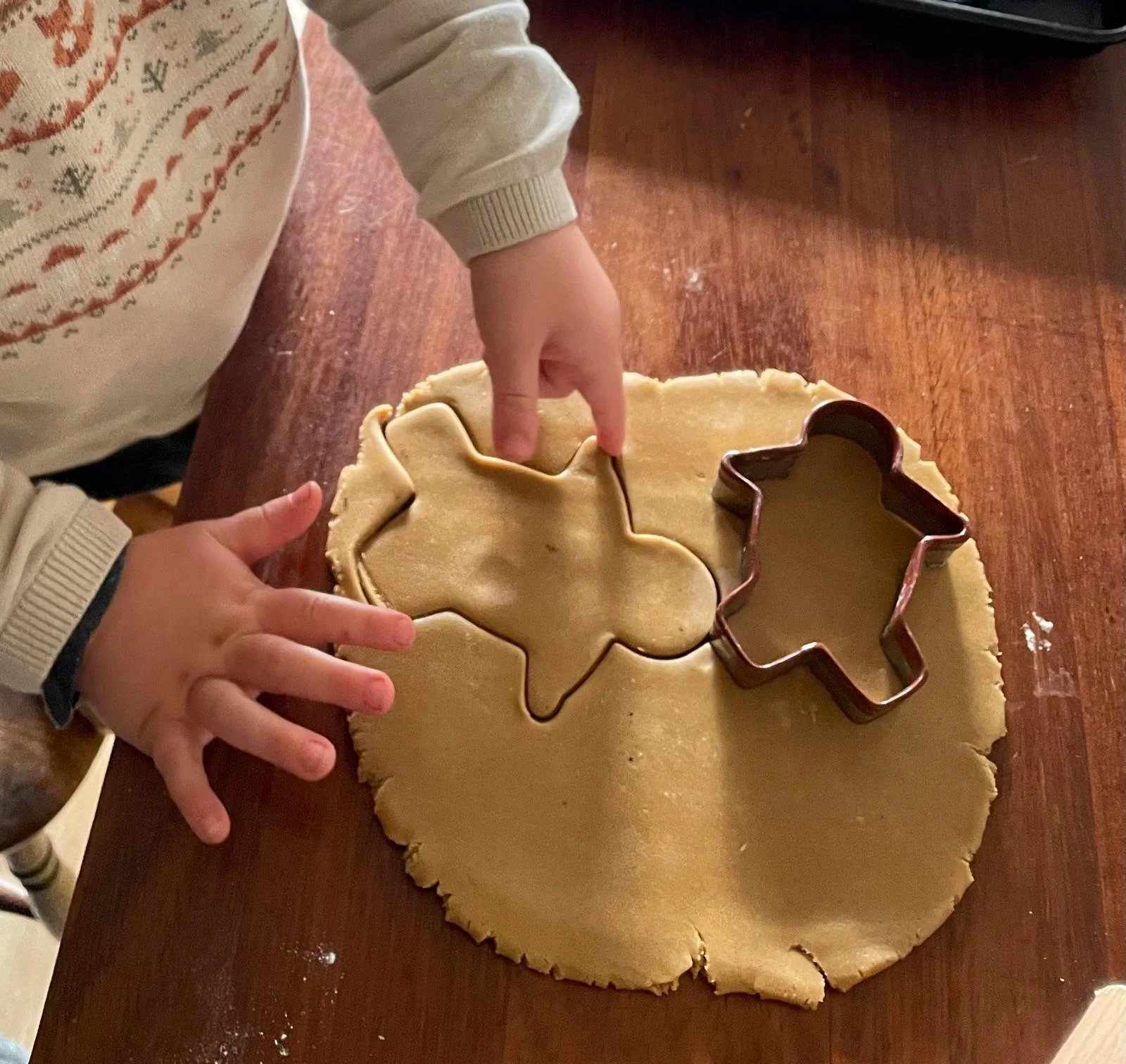
Boots kicked off by the door. Scarves hung. The kitchen begins to fill – laughter, chatter, little hands reaching for aprons. Soon a child is perched on a stool, one leg swinging, a trail of flour on their sleeve. Before long, the tantalising scent of our favourite spiced cookie is curling its way through the air – the recipe dusted off for the season, familiar as ever – the dough flecked with cinnamon and ginger and of course, sticky fingers sneaking tasty crumbs before they even reach the table.
Outside, the garden allotment begins to slow. The last of the squash gathered and brought inside to be set down on warm, handcrafted wooden worktops that catch the afternoon light – ready to be chopped, roasted, and stirred into something comforting.
The fire is lit, logs stacked beside the hearth, a slow warmth filling the house from the ground up. The family cat, already settled in their favourite kitchen chair, purrs softly – a quiet companion to the comforting hum of a cosy kitchen interior that welcomes everyone home.
A pot on the hob now bubbles gently – soup thick and golden, fragrant with garlic and thyme. Freshly baked sourdough sits patiently on the side – crust ready to be torn by hand and shared, like today’s stories, around the kitchen table.
Meanwhile, the kitchen becomes the crafting station – wreaths made from treasures foraged on weekend walks, bright leaves, conkers and seed pods laid out across the island worktop. In this autumnal family kitchen, elbows bump gently in the soft glow of candlelight as little voices debate where the next pinecone should go. A mug of something hot is wrapped in both hands - all part of the cosy seasonal traditions that make the kitchen space more than just a place to cook – a space to gather together, shaped by age-old rituals of home and family.
The drawers close softly. The benches welcome the weight of tired bodies at the end of the day.
A kitchen built not just for cooking, but for the beautiful rhythm of real family life – for the joyful mess, the quiet moments, the everyday rituals that make a house feel like home.
A space that will age with you, carrying the marks of memories - the enduring heart of the home.
Heritage & Hands: How Authentic Craftsmanship is Reshaping Kitchens in Cheltenham, Gloucestershire and the Cotswolds
There’s been a marked shift lately in how people in Cheltenham, Moreton‑in‑Marsh, Winchcombe and across Gloucestershire think about their kitchens. The old divide between “nice but replaceable” and “bespoke masterpiece” is giving way to something more nuanced: kitchens built to belong—to their homes, their surroundings, and to the people living within them. Three key movements are especially relevant for those of us making, designing or renewing kitchens by hand.
Authentic Local Heritage as Design Guide
Homes in the Cotswolds and Gloucestershire are full of character: stone walls, sash windows, exposed beams, warm stone palettes. Designers are increasingly drawing from these features—not simply adding references, but letting them guide overall decisions. In “Kitchen Trends Inspired by Local Heritage” (Country Kitchens, Evesham) you can see how warm stone colours, traditional proportions, and joinery details are blended with modern needs. In Cheltenham, this means kitchens that feel at home rather than transplanted: hardware choices, cabinetry styles, colours that echo local materials.
Design Services: Not Decoration, but Investment
Investing in design isn’t just about making things look pretty. The article “Luxury Cheltenham Kitchen Brand Reveals How Using a Design Service Adds Value to Your Property” shows that homeowners who work with in‑house designers avoid layout and specification mistakes, achieve higher functionality, and often see better resale value. For handcrafted kitchen makers, this supports offering full design, planning and material consultation as part of the core service—not as extra or optional.
Sensory Craftsmanship & Material Detail
The piece on Emma Sims‑Hilditch reminds us that craftsmanship isn’t only in structural joints, curves or finishes—it’s also in the sensory details: how a handle feels, how light catches wood grain, texture of paint or metal, quality of cabinetry hardware. These are small things that matter hugely in everyday use and in how “handmade” or “crafted” a kitchen feels.
What This Means for Handmade Kitchen Makers in Our Region
If you’re designing or building kitchens in Cheltenham, Winchcombe, Bourton‑on‑the‑Water, or beyond, there are a few practices that seem especially fruitful:
Begin every project by understanding the home’s character: materials, local stone, window light, ceiling heights. Let those guide cabinetry height, style, hardware, paint/finish choices.
Position the design process as part of the value proposition. Clients may pay more for design and proper planning up front, but it reduces surprises, rework, waste—and often raises satisfaction and resale return.
Lean into material honesty and sensory detail: tactile finishes, hardware that feels good, wood with grain visible, paint tones that shift with light—that richness rewards both maker and home.
Offer restoration, refresh, and adaptation paths: kitchens that keep sound structure but renew visible parts (doors, finishes, hardware). These “heritage refresh” jobs let homeowners update the kitchen without rebuilding from scratch.
What feels exciting now is how the handmade kitchen world around Cheltenham and the wider Cotswolds is embracing heritage not as nostalgic decoration, but as a living framework. The craft isn’t just in the cabinet maker’s workshop—it’s in how design begins with place, how materials are chosen, and how every detail is considered. For those of us committed to making kitchens by hand, these are rich times: more people want authenticity, endurance and character. Kitchens that don’t just look good on move‑in day, but grow in beauty, value, and delight through years.
Cotswold Craftsmanship: How Hand‑Built Kitchens Transform Homes
Nestled in rolling honey-coloured hills, Cotswold homes whisper tales of stone and timber. Today, local artisans are translating that heritage into bespoke kitchens—spaces where traditional techniques meet contemporary living. For Bread Furniture clients and discerning homeowners, these trends offer a blueprint for elevating any kitchen project.
Grounded in Local Materials
Designs emerging from Cheltenham borrow directly from their landscape. Slate-grey quartzite and marble worktops dance with walls of exposed Cotswold stone, while cabinetry finishes echo the region’s signature limestone. As seen in the Homes & Gardens tour of an open-plan Cotswold kitchen remodel, replacing upper cupboards with a walk-in pantry under the stairs preserves sightlines and heritage character, all without sacrificing storage or function.
Joinery That Speaks of Heritage
At the heart of every handmade kitchen lies meticulous carpentry. Artisans use mortise-and-tenon frames, dovetail drawers and tongue-and-groove panelling crafted from sustainably sourced English oak and ash. The Country Kitchens blog on local heritage highlights how these methods, combined with Georgian-inspired proportions, form cabinets that endure daily use and outlive trends—becoming true heirlooms.
Hand-Applied Finishes for Depth and Patina
No spray finish can rival the warmth of hand-brushed paint. Multiple layers are sanded between coats, creating subtle brushstroke variations and a patina that deepens with age. This nuance is celebrated in These Three Rooms’ inside look at handmade kitchens, where each bespoke element—from delicately moulded cornices to hand-wiped surfaces—invites you to appreciate the maker’s touch.
Integrating Modern Performance
While rooted in tradition, these kitchens meet today’s performance standards. Energy-efficient range cookers tuck neatly into original inglenooks; under-counter refrigeration conceals behind shaker doors. Task lighting—pendants over islands and LEDs under cabinets—ensures function without compromising form. The Homes & Gardens remodel demonstrates how elegant lighting schemes can illuminate both marble and mortar, balancing practicality with authenticity.
Designing for Narrative and Longevity
A handcrafted kitchen is an investment in story. Each joint and finish speaks of hands at work, of local materials chosen with intention. By sourcing regionally—stone quarried nearby, timber from Gloucestershire woodlands—homeowners support sustainability and craft. These kitchens aren’t built for fleeting trends but as legacies, designed to enrich family life for generations.
Bring Cotswold Craftsmanship to Your Home
Begin with Place: Select materials—stone, solid oak, wrought iron—that echo your setting.
Prioritize Joinery: Partner with artisan cabinetmakers skilled in traditional techniques.
Embrace Hand Finishes: Tour workshops to witness the layering and sanding process firsthand.
Plan for Performance: Integrate appliances subtly to preserve sightlines and heritage character.
Think Heirloom: Choose designs and materials that develop a patina over time and tell a story.
By weaving these elements together, Bread Furniture can create kitchens that feel inevitable—spaces that speak of land, maker and purpose, destined to stand as testaments to enduring craftsmanship in the heart of the Cotswolds.
A kitchen isn’t just a work surface—it’s a vessel for meals, conversation, time. Bring it to life with craft that’s rooted: rooted in land, in home, in lineage. The Cotswold kitchens we’ve looked at aren’t museum pieces—they’re living rooms. And that’s design that endures
Mixing Metals
In UK kitchen design for 2025, one small change is making a big impact: mixing metal finishes. Gone are the days when chrome everything was the go-to. Interior designer Jojo Barr of House Nine points out that a single metal palette can date a kitchen quickly . Savvy homeowners and designers are now opting for a layered approach: matte blacks, polished brasses, and brushed nickels all play their part.
Why Mixing Metals Works
Depth and Texture: A single metal blend can feel flat. Varied finishes catch the eye and build richness in the design.
Timeless Edge: Metals like brass add a sense of heritage, while black brings modern contrast. Together, they create a look that feels both grounded and contemporary.
Flexible Updates: Swapping one finish is much easier than replacing everything—great for future updates or tweaking trends.
How to Use the Mix-Metal Trick
Choose a Dominant Metal
Start with your base—maybe black handles—then select a secondary metal like brass for taps or light fittings to create cohesion.Spread Finishes Thoughtfully
Don’t just group the secondary metal in one area. Scatter brass across taps, knobs, and pendant fittings to maintain balance.Match Function to Finish
Use polished brass on elements like taps and knobs that are touched often. Matte black works well on fixed or bulk features like hoods or cabinet hardware.Use Metal to Highlight
Contrasting metal finishes can draw attention to focal points—like spotlighting a statement tap with brass while keeping the rest understated.
Real Homes, Real ResultS
This practice has gained momentum in the UK—where kitchens frequently mix heritage architecture with modern fittings. In period homes, brass pairs beautifully with Victorian blues; in modern flats, black-grounded cabinets come alive with a touch of warmth.
Beyond Looks: The Practical Upside
Durability: Matte and brushed finishes hide fingerprints better than glossy options.
Balanced Lighting: Reflective metals disperse light, while darker metals absorb it—giving a cook space better balanced lighting and reduced glare.
How to Try It Today
Start Small: Change tapware or knobs in one zone.
Use Sample Packs: Order finish samples and test them under your kitchen lighting.
Keep Tools Handy: Matte spray paint works wonders on outdated fixtures, making a clean, easy start to mixing.
In 2025 UK kitchens, mixing metals isn’t just decorative—it’s a smart, sustainable design strategy. It gives depth, cuts the risk of quick-dating, and allows future-friendly tweaks. So next time you’re planning hardware, think less about matching, and more about layering. A kitchen with mixed metals is more than pretty—it’s built to last.
No Fuss, Just Function: Smarter Design for Small UK Kitchens
In a small UK kitchen it pays to break all the so-called rules. At bread. we reckon clever design is a bit like baking the perfect loaf: knowing what to leave out counts as much as what you throw in. Here’s how you can turn a cosy galley or snug terrace kitchen into a proper hub without feeling cramped.
Bin the Rulebook
Forget those old “must-haves” like endless walkways or corner cupboards you never use. Treat every inch as precious. Pop a carousel unit into that awkward corner, stash gadgets in under-sink drawers, and fit a slim pull-out pantry. It’s all about making storage work for you without trampling over your feet.
Give Everything a Job
A small kitchen only works if each bit pulls its weight. Go for deep drawers that swallow pots and pans, build a hideaway cupboard for your blender, and slot in recycling bins on runners. Clear worktops help you chop veg with ease and stop the place looking like a jumble sale.
Bring the Outside In
A handful of potted herbs on a shelf or a strip of reclaimed wood can soften things up. Natural stone backboards and oak shelving feel warm underfoot and give your kitchen a bit of life. In a flat with grey skies outside, these touches make a world of difference.
Let Light Stretch the Space
Draw the eye upwards with ceiling-high cupboards or slim cabinets that reach for the ceiling. Light-reflecting matt paints or soft-gloss tiles catch every scrap of daylight. Anchor the look with a pop of colour on the door handles or an oak ledge for your favourite mugs.
Add a Dash of Personality
Your kitchen should taste of you. Mix slate-coloured units with warm oak worktops. Fit reeded glass doors on a dresser‘s upper half. Paint one wall in a muted sage or duck-egg blue. Little touches like these stop the space feeling like an office and make it feel proper yours.
The Rise of a Well-Planned Kitchen
Good kitchens take a bit of proving. Think of it like a slow-proved sourdough. Plan your storage, pick honest materials and keep layouts flexible. Pull-out tables or moveable counters help you switch from breakfast prep to evening drinks in no time at all.
When you challenge what you thought you couldn’t do, you end up with a kitchen that’s more about real life than square metres. That feels warm, works hard and gets better the more you use it. Now that’s a kitchen to savour.
How Colour, Light & Sustainability Are Transforming UK Kitchens in 2025
In 2025, UK kitchens are becoming more than utility spaces—they’re creativity hubs that combine function, sustainability, and bold design. Three recent UK-focused kitchen stories highlight the shift: a dramatic colour overhaul in London, a chef’s countryside workspace, and a return to eco-friendly clay plaster. Each showcases a thoughtful response to light, lifestyle, and material choices.
1. Colourful, Light-Filled Transformation in London
Designer Lizzie Green’s London kitchen redesign proves that small spaces can feel expansive with considered planning. Removing internal walls and adding a glazed side return flooded the kitchen with light. The bold palette—sky-blue cabinetry, blush-pink walls, and purple-veined marble countertops—pair beautifully with brass and chrome accents. Textural details, like reeded glass partitions and vintage furnishings, layer in character. This kitchen rips up the rulebook on safe neutrals, prioritising light, personality, and clever layout adjustments .
2. Chef’s Kitchen That Blends Warmth with Functionality
In the remote Welsh countryside, chef Crispin Chetwynd’s kitchen combines industrial utility with local craftsmanship. Designed by Irving Sykes, it features ash wood surfaces, copper piping shelves, and open utensil rails—adding both practicality and visual depth. Pink plaster walls and dark cabinetry anchor the space, while bespoke elements reflect the chef’s working life. It’s a reminder that thoughtful materials and layout design can elevate a kitchen into a culinary and social venue .
3. Eco Credentials Meet Interior Design with Clay Plaster
Across the urban–rural divide, clay plaster is gaining traction in UK home interiors thanks to its natural capacity to regulate humidity and absorb pollutants. Firms like McLean Quinlan and 23 Architecture are applying it to walls with low environmental impact and high aesthetic value. This material offers both style and sustainability—earning praise not just as a finish but as a functional feature akin to air purification .
Why These Trends Matter for UK Homes
Natural Light & Layout: UK homes can be compact and vary wildly in light. Structural changes, like removing walls or adding glazing, can transform atmosphere. Bold colour enhances light reflection, making compact spaces dynamic and vibrant.
Personality & Practicality: Commercial-style storage, bespoke surfaces, and mixed finishes make kitchens feel authentic and used. They also reward usability—drawer rails become decorative focal points.
Sustainable Materials: Homeowners increasingly prioritise health and sustainability. Clay plaster offers low-carbon production and indoor comfort benefits. Using locally-sourced timber and recyclable finishes supports eco-conscious design decisions.
Bringing It All Together
Test Colour in Context
Try paint samples and materials in your actual kitchen light—north-facing spaces, in particular, can look drastically different throughout the day.Prioritise Kitchen Flow
Reconfigure layouts where possible: even small changes (glass panels, removal of walls) can enhance light and connectivity.Choose Materials with a Purpose
Consider eco-benefits alongside aesthetics—clay plasters, hardwood worktops, and recycled accents add warmth and sustainability.Layer Finishes and Hardware
Pair bold cabinetry with mixed metals, natural textures, and feature lighting to punctuate personality and prevent monotony.
Conclusion
UK kitchens in 2025 are less about fitting into a trend and more about fitting lives—natural light, personality, and sustainable choice. From farmland to city flats, these kitchens balance design and real-world use, offering a blueprint for inviting, future-ready homes that still know who they are.
Rethinking Kitchen Wall Colours: Why 2025 Is the Year We Say Goodbye to Grey
For over a decade, grey walls have been the go-to choice for modern kitchens. From sleek urban apartments to spacious rural cottages, this neutral palette offered flexibility and a veneer of understated elegance. Yet, as any seasoned designer will tell you, trends evolve—and so do our tastes. In 2025, the kitchen wall colour revolution is well under way, and grey is losing its lustre. Here’s why you should consider warmer, more inviting alternatives for your next kitchen refresh.
1. The Limitations of Grey
Grey works brilliantly in rooms bathed in natural light, but in low-light kitchens—common in flats or northwest-facing homes—it can feel lifeless. Pale greys sometimes read as cold, while darker charcoals can make small spaces look cramped. Moreover, on the resale market, overly grey kitchens often come across as formulaic rather than fabulous.
2. Embracing Warmer Neutrals
Enter beige and greige: the understated heroes of 2025 kitchen design. Unlike clinical whites or moody greys, these earthy neutrals add a soft wash of warmth that flatters both natural and artificial light. Pair them with timber island countertops, rattan stools or sandstone splashbacks to create a cohesive, tactile scheme. In a north-facing kitchen, a deeper greige can counteract bluish daylight, while in a sunny, south-facing space, a lighter beige keeps things bright without glaring.
3. Bringing the Outdoors In with Green
Green kitchen paint is far from a fad. From moss-inspired olives to soft sage tones, green walls offer an almost therapeutic backdrop for cooking and entertaining. They foster a calm, restorative ambience—perfect for homes where the kitchen doubles as a family hub or remote-working station. Green also pairs effortlessly with potted herbs, open shelving displays and live-edge woodwork, reinforcing the connection between indoors and out.
4. The Ever-Reliable Creamy White
For those not quite ready to abandon white walls, creamy whites provide a subtle evolution. Opt for shades with warm undertones—think eggshell or ivory rather than stark snow. These variations maintain the sense of spaciousness white delivers, yet avoid looking clinical. Creamy whites balance beautifully with brass hardware, off-white subway tiles and beige stone benchtops.
5. Practical Benefits
Beyond aesthetics, these warmer hues are more forgiving of everyday life. Soft greens and earthy neutrals conceal minor scuffs and fingerprints far better than pure white or mid-tone grey, reducing the need for frequent touch-ups. They also act as a neutral backdrop that supports bold accent colours in décor, artwork or appliances, offering endless styling possibilities.
Conclusion
Kitchen wall colour is more than decoration—it sets the tone for daily life in one of the most lived-in rooms of your home. In 2025, it’s clear that warmer, more characterful hues have overtaken grey as the designer’s choice. Whether you lean towards a gentle greige, soothing green or creamy white, these colours promise to make your kitchen feel welcoming, timeless and full of personality. So, next time you’re faced with a paint swatch, think beyond grey—and embrace a palette that truly reflects the heart of your home.
Australia Leads the Charge: Why Quartz Countertops Might Be Getting a Makeover
The world of kitchen countertops is about to see a shift, and Australia is at the forefront. In a world-first move, the country is implementing a ban on engineered stone, commonly referred to as quartz, due to health risks associated with the material. But what exactly is the danger, and how does it affect the worktops you choose?
Silica Dust: A Silent Threat for Workers
The primary concern surrounding engineered stone is the presence of silica. When cut, shaped, and polished, the material releases fine silica dust particles. Inhaling these particles can lead to silicosis, a debilitating lung disease with no cure.
Australia's ban is a direct response to protecting workers in the construction and fabrication industries who are most at risk from exposure. The decision highlights the potential dangers associated with engineered stone and raises questions for homeowners everywhere.
End User Risks: Less Direct, But Still a Concern
While the risk of silicosis for homeowners is significantly lower than for those working directly with the material, there are still potential health concerns. Long-term exposure to low levels of silica dust is a developing area of research, and some studies suggest it could contribute to respiratory problems.
The Case for Low Silica Quartz: A Viable Option?
The Australian ban doesn't necessarily mean the end of beautiful quartz countertops. Manufacturers are developing engineered stone with lower silica content. However, the effectiveness of these options in reducing health risks is still under debate. Safe Work Australia, the regulatory body behind the ban, concluded that there's "no evidence" that lower silica levels translate to guaranteed safety.
Kitchen Countertop Alternatives for the UK Market
With the concerns surrounding engineered stone, UK homeowners looking for alternatives have several options:
Natural Stone: Granite, marble, and soapstone offer timeless beauty and durability. However, they require more maintenance and can be more expensive than engineered stone.
Laminates: Modern laminates offer a wide variety of styles and finishes, are easy to care for, and are a budget-friendly option. However, they may not have the same luxurious feel as natural stone or quartz.
Solid Surface Materials: These man-made materials, like Corian, are non-porous, durable, and come in a wide range of colours. While they can be scratched, they are easily repairable.
The Future of Countertops: A Move Towards Safety and Sustainability
The Australian ban on engineered stone is a wake-up call for the industry. As homeowners, we should be aware of the potential health risks associated with certain materials and advocate for safer alternatives. This could lead to the development of truly low-risk engineered stone or a renewed appreciation for classic countertop materials. Ultimately, the future of countertops should prioritise both aesthetics and the well-being of workers and homeowners alike.